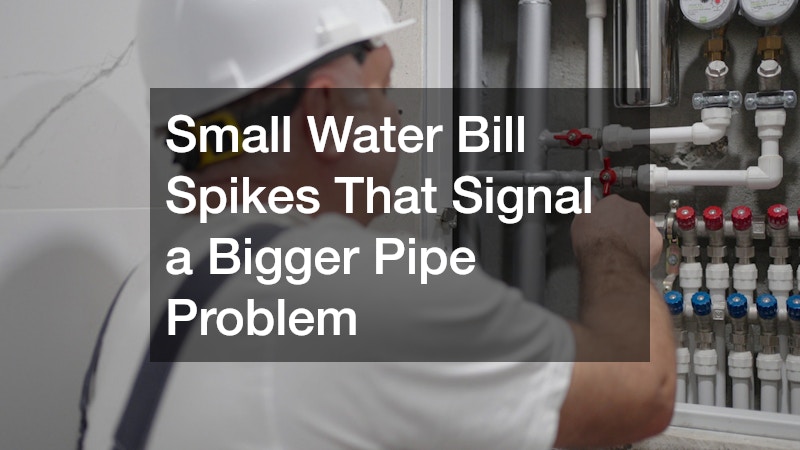
A water bill that creeps up by ten or twenty dollars a month is easy to ignore, especially when nothing looks wrong on the surface. But small, steady increases are often the earliest warning sign of a hidden pipe problem that will only get more expensive the longer it goes unchecked. Understanding what these subtle changes mean can help you catch a leak before it turns into a flooded yard, a cracked foundation, or a five-figure repair bill. This guide breaks down the most common causes behind creeping water bills and what to do about each one.
Track Your Monthly Usage Against Household Habits

The first step in catching a hidden leak is knowing what your normal usage actually looks like. Pull your last twelve months of water bills and compare gallons used, not just dollars spent, since rate increases or tiered pricing can mask a genuine usage spike. Most utilities list usage in units of 748 gallons (called CCF or HCF), so line up those numbers month by month rather than relying on the total charge at the bottom of the bill.
A useful baseline: the EPA estimates the average household uses around 300 gallons per day, or roughly 3,000 gallons per person monthly depending on fixtures and habits. If your family of four is suddenly showing usage more typical of six or seven people, that gap is worth investigating rather than dismissing as a fluke.
Pay attention to seasonal context too. A jump in July or August might simply reflect lawn watering or filling a kiddie pool, but a winter spike when irrigation systems are shut off is harder to explain away.
If your household size and habits have not changed but usage climbs two or three billing cycles in a row, that pattern is rarely a coincidence. Even an increase of 1,000 to 2,000 gallons a month with no clear cause — no new appliances, guests, or landscaping projects — is often the earliest financial clue that water is escaping somewhere between the meter and your fixtures.
Many utilities now offer online portals that show daily or hourly consumption, which makes spotting irregular patterns much easier than waiting for a paper bill. Some even let you set alerts that text or email you when usage crosses a threshold you define, so you don’t have to remember to log in and check manually.
A steady overnight flow when no one is home or awake is one of the clearest indicators that water is escaping somewhere in your system. To test this yourself, check your water meter before bed and again first thing in the morning without using any water in between; if the numbers have moved, something is leaking. A household of four typically uses very little water between midnight and 6 a.m., so any consistent flow during those hours deserves a closer look.
Comparing month over month, rather than looking at a single bill in isolation, gives you the clearest picture of a developing issue. Line up at least three to six months of usage side by side, and factor in seasonal changes like lawn watering, holiday guests, or filling a pool, since these can explain a spike on their own. If usage climbs 10 to 15 percent or more without any obvious change in household habits, that gap is worth investigating before it grows larger and more expensive.
Read Your Water Meter to Confirm a Leak
Your water meter is the most reliable diagnostic tool you already own, and checking it takes only a few minutes. Turn off every faucet, appliance, and irrigation valve in the house, then locate the meter and note the exact reading. Wait two hours without using any water, then check it again.
- If the number has moved at all, water is flowing somewhere in your system even though nothing is turned on
- Many meters also have a small triangular or star-shaped leak indicator that spins when water is passing through
- A slow, continuous spin with all fixtures off almost always points to an underground or in-wall leak
- Testing at night before bed and again first thing in the morning can confirm findings if the daytime test is inconclusive
Investigate a Running Toilet Before It Costs You

A toilet that runs intermittently or hisses quietly can waste hundreds of gallons a day without ever overflowing or making an obvious mess. In fact, a constantly running toilet can burn through 200 gallons or more in 24 hours, which is enough to push a typical water bill up by $50 to $100 in a single billing cycle. Because the sound often fades into background noise, many homeowners don’t notice the problem until the bill arrives.
The most common culprit is a worn flapper valve that no longer seals completely, letting water trickle from the tank into the bowl around the clock. You can confirm this with a simple test: add a few drops of food coloring to the tank and wait fifteen minutes without flushing. If color appears in the bowl, the flapper is leaking and needs to be replaced.
Other possible causes include a fill valve that won’t shut off completely, a float set too high so water constantly spills into the overflow tube, or a warped flush handle that keeps the flapper slightly propped open. Each of these is easy to inspect visually by simply lifting the tank lid and watching the mechanism after a flush. This is one of the cheapest fixes on this entire list, often costing less than twenty dollars in parts and requiring only a wrench and ten to fifteen minutes of work.
A running toilet rarely announces itself with an obvious sound, but it can waste anywhere from a few gallons to over 200 gallons a day, quietly inflating your water bill in the process. The most common culprit is a worn or misaligned flapper, the rubber seal at the bottom of the tank that controls water flow into the bowl. Over time, flappers degrade from constant exposure to water and chemicals, warp out of shape, or simply fail to seal properly.
To test for this, add a few drops of food coloring to the tank and wait fifteen minutes without flushing. If color appears in the bowl, the flapper is leaking and should be replaced right away. Flappers are inexpensive, usually under ten dollars, and most homeowners can swap one out in fifteen minutes with no special tools.
While you’re checking, also glance at the fill tube and the water level inside the tank, since an overfilled tank can send water trickling into the overflow tube even with a perfectly good flapper. The water level should sit about an inch below the top of the overflow tube; if it’s higher, adjust the float to lower it. Because this fix is so simple, ruling it out early saves you from chasing more expensive explanations unnecessarily.
Recognize the Warning Signs of an Underground Water Line Leak
When the meter test confirms a leak but nothing inside the house explains it, the problem is likely in the supply line running from the street to your home. These lines are buried anywhere from one to six feet deep depending on your region, and years of soil shifting, tree root intrusion, or simple corrosion can eventually crack or separate a joint. Because the water escapes underground, you may not see any surface evidence until the damage is significant.
- Unusually green or lush patches of grass in an otherwise uniform lawn
- Soft, spongy, or sunken ground near the path between the street and your house
- A faint sound of running water audible near the meter box even when fixtures are off
- Noticeably lower water pressure throughout the house
If you notice several of these signs together, calling in professional plumbers for a targeted water line repair is far more cost effective than waiting until the leak surfaces and damages your driveway, walkway, or landscaping.
Watch for Signs of a Slab Leak Beneath Your Foundation

A slab leak occurs when a pipe running underneath your home’s concrete foundation develops a crack or pinhole, and it is one of the more serious causes of a rising water bill. Because the pipe is encased in concrete, the leak often goes unnoticed until water finds its way up through flooring or along baseboards. Warm spots on the floor, the sound of running water when everything is off, and unexplained cracks in walls or tile are all classic indicators.
Slab leaks tend to worsen quickly because the constant moisture can erode the soil supporting the foundation, leading to shifting and structural cracks over time. A professional slab leak repair typically involves locating the exact point of failure with acoustic or infrared equipment before rerouting or repairing the damaged section. Catching this early not only protects your foundation but can save thousands of dollars compared to waiting until visible flooring damage forces the issue.
Check Your Water Heater for Slow Leaks and Sediment Buildup
An aging or failing water heater can quietly waste water and money long before it fails completely. Sediment buildup at the bottom of the tank forces the unit to work harder and can eventually cause small cracks or corrosion around fittings and valves. A slow drip from the pressure relief valve or the tank itself may not seem dramatic, but it adds up significantly over weeks and months.
Most water heaters last between eight and twelve years, and units approaching that age are far more prone to these small leaks. Scheduling routine water heater repairs, including flushing the tank annually to clear sediment, extends the unit’s lifespan and prevents the kind of slow leaks that quietly inflate your bill. If you notice rust-colored water, pooling at the base of the unit, or a tank that is warm to the touch on the outside, it is worth having a technician inspect it before it fails outright.
Inspect Outdoor Fixtures, Irrigation Lines, and Fencing Areas

Outdoor water use is one of the most overlooked sources of a rising bill because homeowners assume any leak would be visible in the yard. Irrigation systems, hose bibs, and buried sprinkler lines can develop small leaks at fittings and valves that only show up as unusually damp soil or a slight drop in water pressure when the system runs. These leaks often go unnoticed for months, especially in larger yards with less frequently used zones.
It is also worth checking areas along your property line where digging or ground disturbance may have occurred, such as during a recent fence repair or post replacement, since buried lines can be accidentally nicked during that kind of work. This applies to commercial properties as well, where excavation near loading docks or storefronts sometimes coincides with commercial door repairs, and the ground disturbance from that work can just as easily damage a nearby water line. If you had any excavation done for fencing, decking, or landscaping in the past year and your bill rose shortly after, that timing is worth investigating. A quick walk of the yard after heavy rain can also reveal soggy patches that would otherwise go unnoticed.
Understand How Heating and Furnace Systems Can Affect Water Use
Homes with boilers, hydronic heating, or furnace humidifiers rely on a connection to your water supply, and problems in these systems can quietly show up on your water bill. A boiler that loses pressure repeatedly may be leaking internally or through a fitting, requiring it to refill with fresh water more often than normal. Furnace-mounted humidifiers can also develop stuck valves that allow water to run continuously into the drain instead of cycling properly.
- A boiler pressure gauge that consistently reads low shortly after refilling
- Visible moisture or rust near heating equipment connections
- A humidifier that runs even when the furnace is off
- Higher than expected water use during heating season specifically
If you notice these seasonal patterns, scheduling heating repairs alongside a general plumbing inspection can help identify whether your furnace installs or older boiler equipment are contributing to the spike, since these systems are often overlooked during a typical leak search.
Know When a Small Leak Signals a Bigger Structural Issue
Some water bill increases point to problems well beyond plumbing, particularly in older homes where multiple systems age together. Persistent moisture from a slow leak can seep into walls or trim painted decades ago, and disturbing that material without care raises the risk of exposure in homes that may need lead paint repair before any renovation work begins. This is an important consideration for anyone budgeting for repairs in a home built before 1978, when lead-based paints were still common.
Chronic dampness can also affect structures you might not immediately connect to plumbing, including garage framing or slab areas beneath heavy doors, sometimes requiring garage door repairs if moisture has caused warping or track misalignment. Foundation cracks near exterior walls can widen when saturated soil shifts around the footing, so it’s worth having a contractor check for settling if a leak has gone unnoticed for weeks or months. Recognizing these downstream effects helps you budget realistically for the full scope of repairs rather than being surprised by secondary damage later.
A rising water bill is rarely random, and in most cases it is your utility quietly telling you that something in your plumbing or connected systems needs attention. Start with the simple checks, like the meter test and toilet dye test, before moving on to more involved inspections of underground lines, water heaters, and heating equipment. If your own troubleshooting points to something beyond a simple fixture fix, bringing in a licensed professional sooner rather than later will almost always cost less than waiting. Taking action now protects your home, your foundation, and your wallet from a problem that only grows more expensive with time.